
Welcome to the Adventure Motorcycle Traveller Reviews. Here’s a 12,000-mile review of the Ducati DesertX Rally by professional motorcycle test rider, Dickie Fincher.
Contents

By Dickie Fincher
Ex-MCN road tester, Bike editor and occasional wanderer.
Quick info
- Price: from £18,995
- Model: 2024
- Owned: From new
Ducati DesertX Rally specs
- Engine: 90-degree V-twin, 937cc cc, Desmodromic valvetrain, 4 valves per cylinder, liquid cooled
- Power: 110 bhp
- Torque: 68lb-ft
- Dry weight: 203kg
- Seat height: 910mm
- Tank capacity: 21 litres
- Tyres: 21 and 18
- Front suspension: KYB 48 mm closed cartridge fork, adjustable compression and rebound
- Rear suspension: KYB shock absorber with 46 mm piston, compression, rebound and preload adjustable
Ducati DesertX Rally - Pro Review
The DXR’s second birthday is just coming up. My pre-purchase test ride was three miles around a Nottinghamshire suburb where I fell for its uncanny balance and control. With adventures already in mind, I pressed the buy button, leaving the rest of the hoped-for abilities to reveal themselves, or not, as seat-time accrued.
Over the past 12,000 miles it’s been a happy relief to discover that it does other things too. The engine is terrific, the steering and the oversized suspension is controlled enough to make road riding a massive hoot. Not everything that glistered turned out to be gold, but that initial impression of confidence with added spice remains.

DesertX Standard vs Rally
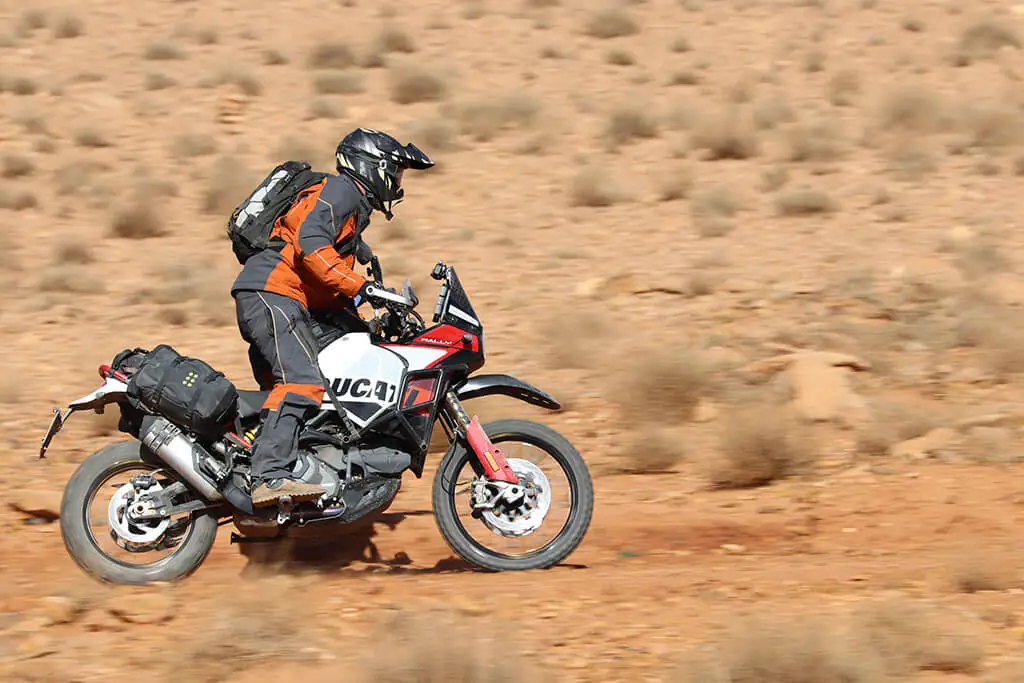
Now might be a useful time to ask what a DesertX Rally is (and why did I want one)? The regular DesertX is Ducati’s first play at the adventure bike market, if you don’t count their Scrambler Desert Sled or the popular Multistrada which sit at either end of the trail-lookie-likey/tall-rounder graph. Both lack all-round ability, whereas the 2022 DesertX has a 19 litre tank, 100+bhp from a torquey motor, long-travel suspension that’s effective on and off road and looks like a refugee from the 90s desert racing scene.
The Rally came out in 2024 and gets uprated and taller suspension, tougher wheels (which need tubes, bah), new yokes to compensate for the suspension, a carbon-fibre bashplate, high front mudguard, bench seat, steering damper and billet aluminium brake and gear lever.
Buying all this lot would cost a few thousand quid and Ducati charges £4k for the pleasure. The suspension is the biggest cost but riding the Rally versus the regular bike, even on the road, proves how incredibly slick the fancy KYB forks and shock are. We shall address whether it’s all worth it in a bit.
Handling
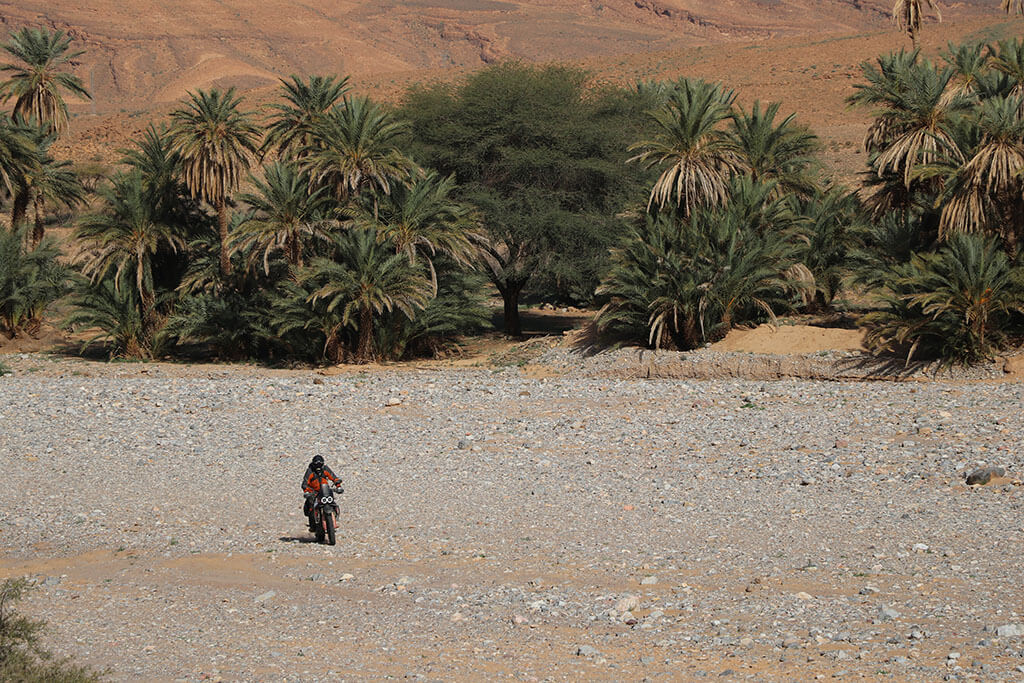
The clincher on that first short ride was the DXR’s extraordinary balance for a bike with the side profile of a bison. You can ride around in tiny circles (handy, given my expertise with Garmin Basecamp), come to a virtual standstill and then use the silky clutch and magnificent engine to squirt you out of trouble. Steering at road speeds is excellent.
This bike is as much fun to punt through the mountains on tarmac as it is to ride off-road. Most testers I’ve chatted to reckon the DesertX is one of the sweetest handling 21-inch front wheeled bikes around. It won several shootouts and Bike Magazine’s Bike of the Year award in 2022, and that wasn’t for the niche off-road aspects of its performance.
The brakes are outstanding, too. They’re certainly oversized for an off-road bike yet have a level of control which makes them work wherever. It means I can use plenty of decelerating power with a loaded bike on dirt-biased tyres and it rarely triggers the safety net. I don’t think I’ve ever deactivated both ends of the ABS but there is a marked difference between modes, to the point where I toppled over on a gravel downhill after forgetting to switch from Touring to Enduro mode. In that it works so well on gravel, but it turns out little can save a doofus.
Adjustable power
Adjustable power with control comes at the rear end of the bike too. What helps the Ducati, both Rally and Regular, is the excellent electronic set-up. Bigger bikes really benefit from a digital helping hand because they can squirt so much torque out with a slip of the wrist. The engine has a fantastic, gruff delivery up to around 5000rpm and then rips vigorously through to the redline. Full power is only really deployed on the road, and even then in bursts between corners.
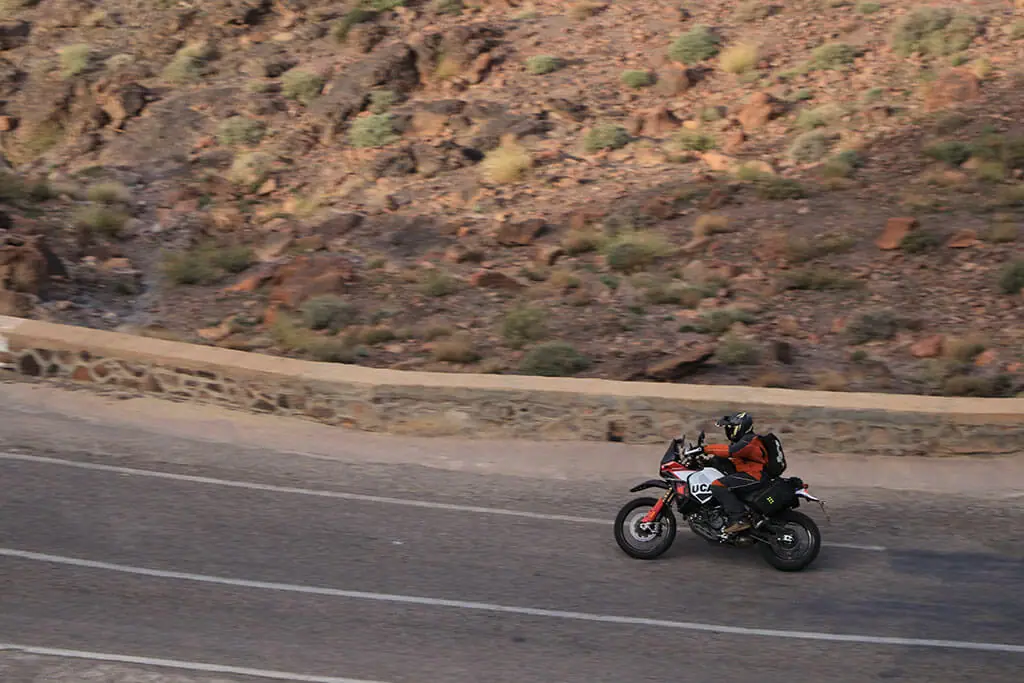
An illuminating ride in the Pyrenees, when I finally bothered to link up the app to the dash and record the event, proved that I’d used a maximum of 8200rpm generating 65bhp and, intriguingly, delivered an average of merely 12.3bhp over 55km. And I thought I was making an effort, even if the bike was merely chugging along beneath me waiting for something (or someone) more exciting to happen. With varied road surfaces, hairpins into broad curves and relentless acceleration and braking, these roads are purpose built for adventure bikes. Wide bars, great visibility and strong torque give a real advantage. The Ducati is fantastic in these places.
Height
Where it feels less fabulous is in town, mainly because of the tall seat height. Getting caught out by off-cambers or suddenly having to dab a foot is less fun. Now try that where the ground is slippy or full of holes. A couple of thousand miles have been on trails and picking through smaller tracks. However sorted the bike is, there will be an occasional balance incompatibility between the DXR and myself. As a tall bike with additionally tall suspension and a taller seat, bleating about the Rally being tall seems churlish.
But I will, because it’s one of the defining elements of a lot of these bigger adventure bikes. Stratospheric seat height is a frustrating compromise driven by the requirements of decent offroad performance. It needs ground clearance and plenty of well-controlled suspension travel. For dilettante wannabes with two-week holiday slots to maximise (like me) it’s bearable because I might want to wind the pace up when time is counting down. So I tip to the tall side of the compromise and try not to fall over.
Protection
Unsurprisingly, sometimes it happens. This has allowed me to discover that the factory accessory crash bars create enough space to crawl out from underneath, but also that they have now cracked a weld. This is not the only evidence that Ducati’s own protection package is unable to look after itself.
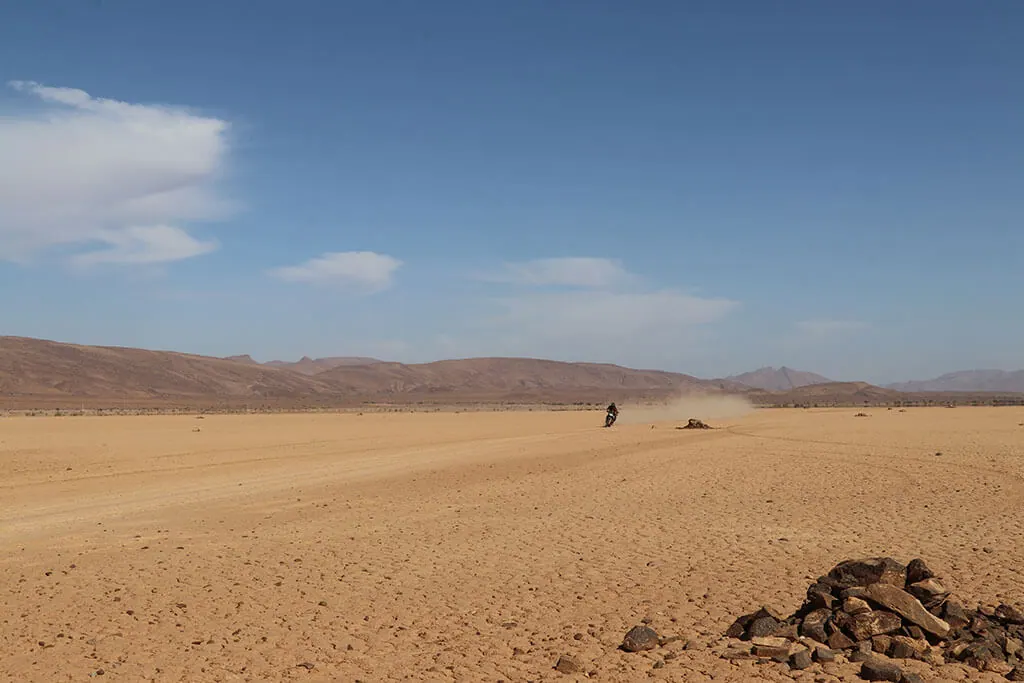
Utterly useless ‘special enduro’ accessory handguards have metal ends but then snap at the plastic connection after stationary topples. Sadly the elegant carbon fibre bash plate has also cracked around the mounting points after some robust impacts from stones in Morocco and Portugal, but it’s not terminal. I’ve fitted Barkbusters to the bars and am still looking at what to replace the crash protection with.
Servicing
When I’m actually able to stay on the bike it sounds good from the rider’s seat. I haven’t fitted an aftermarket pipe despite the potential weight loss and reduced heat soak from the catalytic converter (which gets significant when you’re waiting at junctions anywhere hot). They’re just too noisy, and anyway, the induction roar is pretty compelling from the high-mounted air intake.
Dust-bothering owners worry that the air filter isn’t easy to change. I had mine done in an early service post a 6000 mile desert trip. The inside of the filter box was clean, so it looks like it should last between service intervals. I get it serviced annually and after big trips to make sure riding in grubby conditions isn’t chewing up the innards and the oil has always been passed as clean.
It’s technically due every 9,000 miles or two years, so I’m overdoing it. Ducati servicing to maintain the four year warranty has been around £300. The next one will be a gulper of an 18,000-mile Desmo service costing four times as much. Yowch.
Wheels and tyres
The fancy Takasago rims are stronger than the standard side-spoked tubeless rims. Because I am allergic to changing tubes they have been made tubeless via Central wheel Components’ Airtight system which fills the middle bit of the rim with sealant. Because these rims are lipped you can run any tubeless option on them which keeps a decent choice of tyres available.
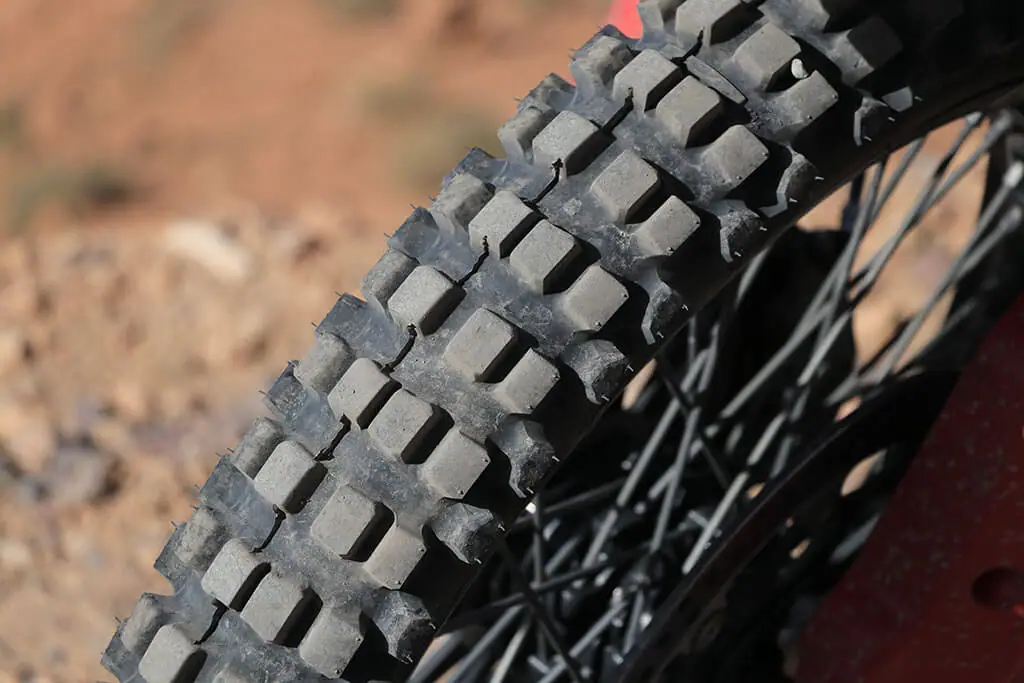
The DesertX seems to be agnostic regarding rubber, in that the three different types I’ve fitted haven’t thrown out the handling until squaring off. Much of this time the Rally has worn off-road rubber, mainly variations of Mitas Enduro Trail, XT and XT+ and the OE Pirelli Rally STR which I refitted for the Pyrenees.
The most fun were the XT+, big blocky things which drove beautifully through all sorts of sand, stone and goop. The startlingly competent electronics keep the bike gliding along tarmac however feistily it’s throttled or braked. They are a bit short on longevity, sadly, so for gravel and road I use the Mitas Enduro Trails which handle well, though are not as quiet as the OE Pirelli STRs. Picking tyres remains a perennial head-scratcher and I’ve not had more than 4k out of any rear, and just 2k from the XT+. Ride slow on road and calm the throttle hand and I bet there’s at least 50% more tread life available.
Riding big bikes offroad does put plenty of pressure on components and the reinforced rims now have a couple of dings, picked up in Morocco on the very rocky trails. This means the front isn’t very airtight so I’ve put a tube back in. It’s generally the rear which gets the punctures so I don’t feel too compromised.
Screen
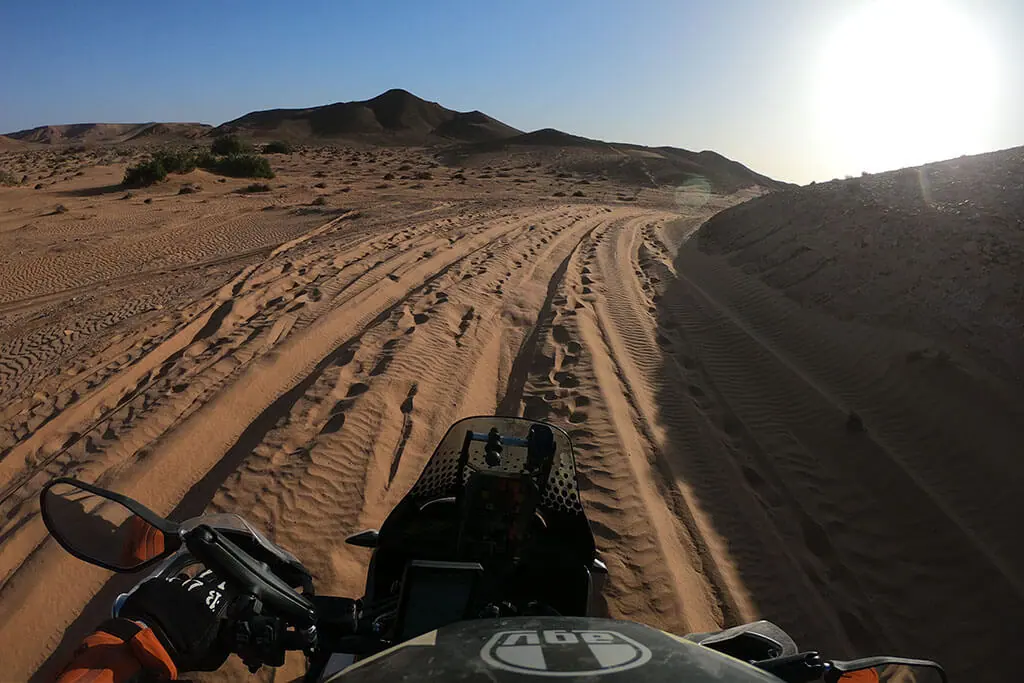
The tall screen in front shows a fair bit of info including the modes which are set via a lovely simple (but frustratingly unlit) button and rocker on the left bar. Press, select, throttle off and you’re in the next mode. There are several, all customisable when stopped. (The new DesertX V2 lets you do it on the move – though anyone who has the capacity to effectively adjust their traction control mid-way through the point where they suddenly realise they need to deserves a Moto GP contract and a circus act).
The two off-road settings change the look of the dash, too, giving you a rally-style distance counter and reminding you that the electronics make a massive difference off-road. I know this because on several occasions I forgot to switch and only discovered this when the brakes went into full anti-lock on gravel roads. Always exciting.
Enduro mode
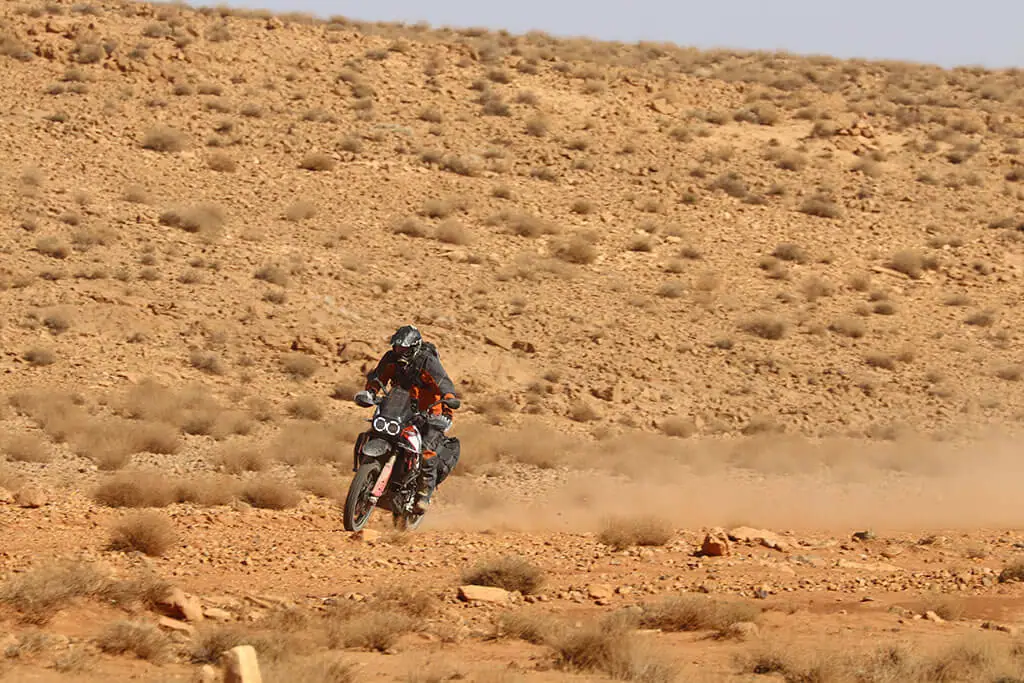
‘Enduro’ has reduced power (‘only’ 75bhp – booooo) though given my app-registered refusal to twist the grip this has not troubled me so far. It also switches off the rear ABS, sets a reduced interference on the front and fiddles with traction, engine braking and anti-wheelie systems. It’s good enough to resolve most issues and turn the bike from a careering dust-bomb into a controlled travel companion. You can be quite ham-fisted with brakes and throttle and it calmly scoops you up and sends you on the way.
Rally mode
‘Rally’ mode releases most of the fail safes and resumes progress as a full-power weapon of mass destruction. I have used it a few times to see what happens and twice by accident when I scrolled past ‘enduro’. Once in a Welsh forest and once in a river bed. Both experiences were best classed as ‘memorable’. It turns out that 100+bhp on a fully loaded bike with few interventions and a doofus at the helm is best avoided.
Navigation
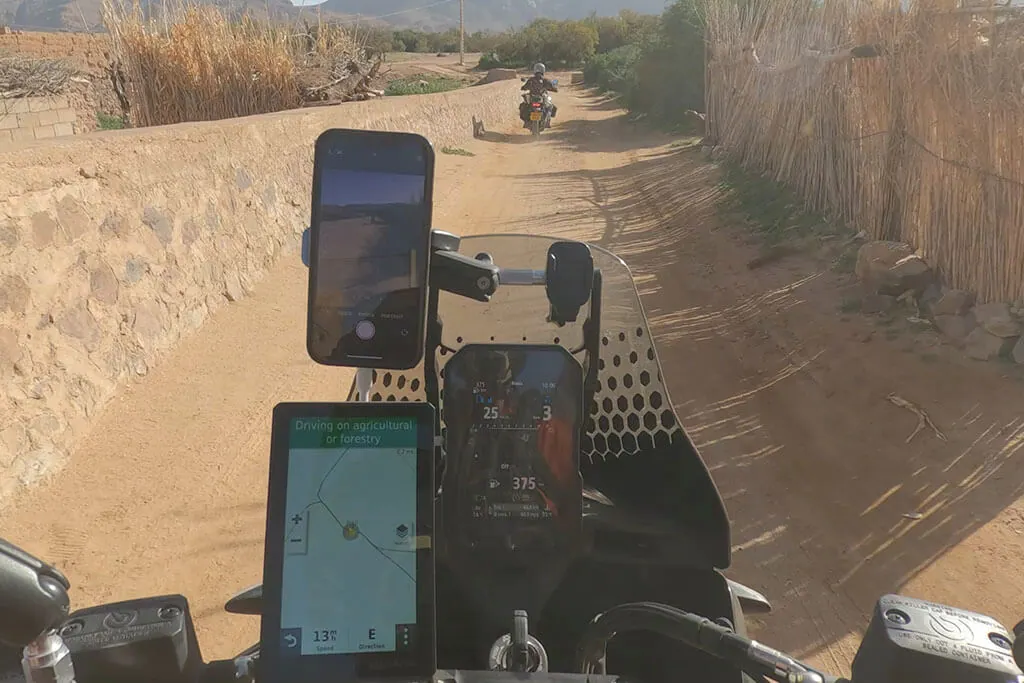
To find out where I’m going there’s a Garmin XT. It was packaged with the bike so it’s called a ‘Ducati Navigator’ but since the sticker placed over the Garmin logo fell off it’s back to being a Garmin again. It’s also a bit far away on the accessory bar behind the windscreen. I’ve since mounted it on a spare RAM ball on the bars and it’s now a bit close… There’s now a phone on the bar which charges through the USB A port and gives me just enough screens to render the actual windscreen almost irrelevant. If I stack them carefully I should be able to watch the IMAX version of the Odyssey on longer trips.
The phone also links to the bike via one of the two Ducati apps I apparently need. The one I always open first isn’t the one linked to the bike, it’s MyDucati which is used to book services and spend more money. The connecting app is DucatiLink which uses the phone to offer the option of navigating via a turn-by-turn panel on the TFT. Or you could just use the phone.
It does also let you mess around with modes and parameters when it’s not crashing. Better the app than me, I suppose. I guess I’m a bit of a grateful luddite when it comes to this stuff – glad there’s an electronic safety net that someone’s worked out, and grumpy that there’s so much faffing available when you could just be, you know, riding.
Modifications
So, onto modifications and why I did them.
First up, the screen height is exactly wrong for me and generates terrible turbulence. This is also related to the sweet retro round mirrors; I have fitted a lower WRS screen (£110) and some old mirrors I found in a box which came off my CRF. Much better. I should really fit those RAM-mount pivoting mirrors and have got a set, but they’re on the CRF…
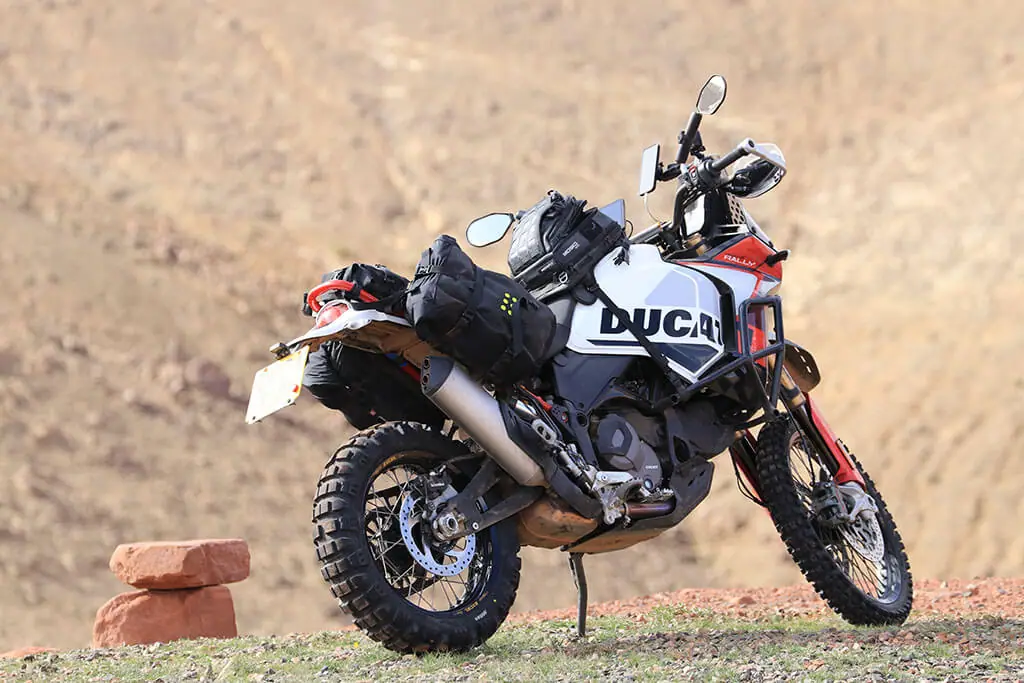
The Rally bench seat is another unpleasant device best suited to standing up. For long trips I have a Wunderlich Active single seat at a testing £350, though it feels like money well spent every time I swap it over. Because the pillion seat sits over the top of the plastic rear mudguard, I use the space to carry a small pack with tools, spare goggles etc and a Kriega soft luggage carrier then sits on top of that. A couple of 18-litre Kriega bags strap onto the sides of that, and there’s space for one or two roll bags above the carrier. It’s hardly an RTW fit-out but it works for around two weeks. The Airtight System seems to be a good idea, dented wheel notwithstanding. It’s about £170 per wheel.
The most recent tweak was to give the DXR a bit more grunt in the rear shock. I love the fluidity of the suspension but the spring rate, certainly at the rear, is more suited to an Italian test rider brought up on a diet of cigarettes and coffee, rather than my rounder self. The shock went off to Maxton who fitted a 20% stiffer spring. It was then off to the Pyrenees where the reduced pitch was noticeable; back on trails in Wales and France it doesn’t seem to have lost the ride quality, though perhaps that soupy plushness is gone.
So what you’re probably wondering is why a rather fruitily-priced dirt-focussed adventure bike needs so much more spending on it to do the job. I’m a bit baffled, too. The core is properly excellent – that engine is so much more potent than the numbers suggest and it really does ride road and trail incredibly sweetly. I love the suspension and figure that upgraded wheels are a good idea for any bigger bike ridden off road. The thing is, you can bespoke suspension and source custom wheels, plus choose your own protection.
I’d go for a plastic bashplate for noise and durability, and since the bars are only really to stop scuffs and dents I’d pick aluminium rather than steel to reduce topweight. Or maybe try to find a robust plastic coating for the tank to stop it getting scratched. I’ve taken the view that this is a dirt bike and therefore will get scuffed up.
Verdict
The base DesertX (and the new version) is incredibly good. Do without the high mudguard, get the suspension revalved and sprung to your requirements (though the new model’s is very good from the crate), fit some tougher wheels and forgo a rally seat. You’ll be a bit closer to the ground, have beefed up the vital bits and have a ripping travel/adventure bike.
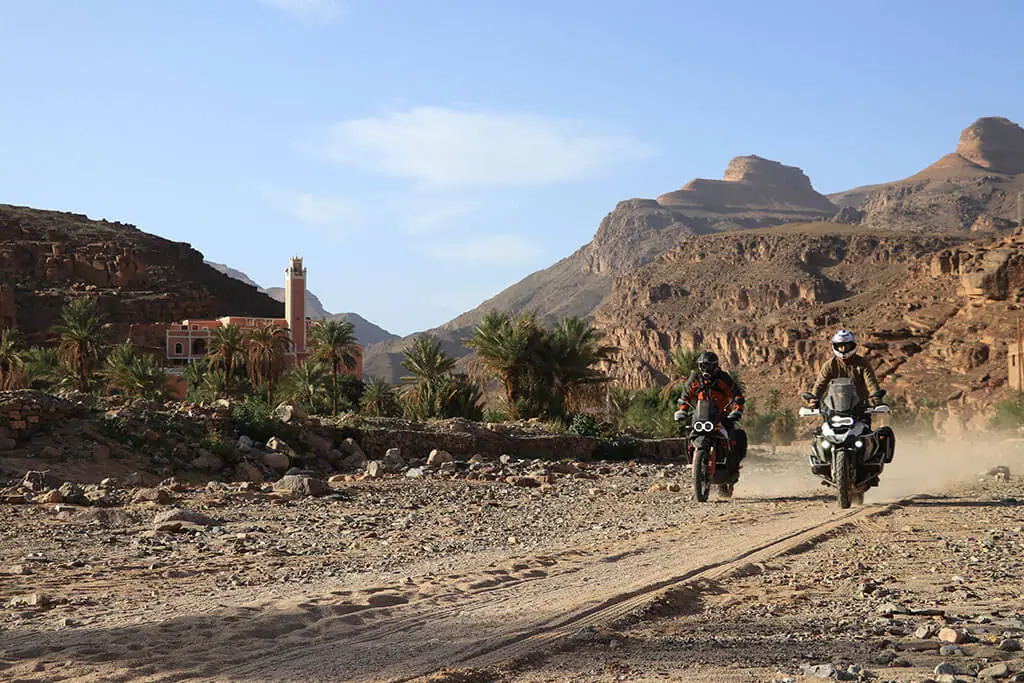
I’ve been utterly chuffed with mine and don’t regret buying it. It’s done Spain, Morocco, France, Wales and all over the UK, including plenty of off road. If I’m heading back from a day out there are trails near me which sometimes just call out to be ridden. It’s always fun to bump into more lightly-equipped trail riders who are amused to find a rally refugee coming their way. It’s always to see it scrabbling along singletrack, generally in the dry – it does have ‘Desert’ in the name after all.
About the author
Dickie Fincher
Ex-MCN road tester, Bike editor and occasional wanderer. Owned a DesertX Rally for two years and 12,000 miles since new and ridden on and off-road across Iberia, Morocco, France and Wales.
Insta: @ofnocountry
Read more on adventure motorcycles and reviews
Thanks for checking out this Ducati DesertX Rally Review. We hope you enjoyed it! Here’s a few more articles on adventure bikes and motorcycle reviews that we recommend you read next.
Try these next…


Are you interested in the Ducati DesertX Rally? Do you have any questions, tips or suggestions? Let us know in the comments below.